
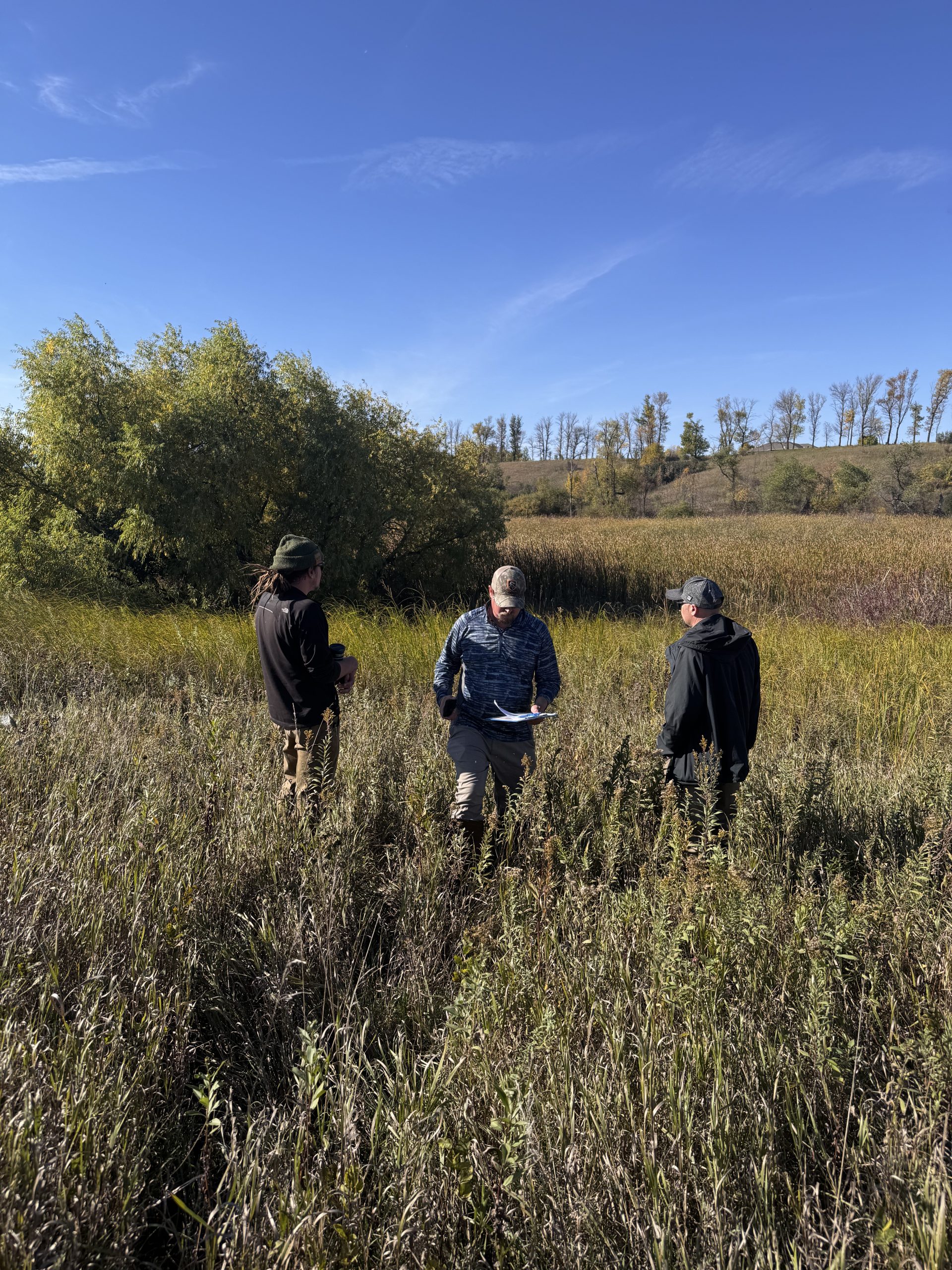
 Even with construction now pushed to Fall 2027, work on the Crissy Lake Modification Project continues behind the scenes. This week, representatives from the MN Department of Natural Resources, Houston Engineering, Stevens SWCD, and the Pomme de Terre Watershed successfully secured a source of sod mats that will be used in the reconstruction of the Pomme de Terre River channel.
What are sod mats?
Sod mats are thick, pre-grown sections of vegetation with dense root systems, harvested in large pieces and moved to a restoration site. Placed along a rebuilt streambank, they give the soil an immediate protective cover. Mats are laid at the elevation where the stream fills its banks, but not just any sod will do. The mats will be placed along the outside of bends of the reconstructed river where erosion is most likely to happen. The team was looking for specific mixes of established native plants with some woody plants, such as willow and dogwood, included. These trees are often used because their roots knit together so densely and, over time, the roots spread into the surrounding soil and help hold the bank in place, so the site stabilizes without relying only on hard materials.
For a river reconstruction, that matters. Newly shaped banks are most vulnerable to erosion before vegetation takes hold, and soil washed downstream can affect the water quality and wildlife below the project. Sod mats guard against that in the early months after construction while seeded areas fill in.
What this means for the project
Securing the mats now fits the project’s goal of reducing disruption to the reconstruction site’s plants and animals, downstream ecosystems, and the surrounding community. It further ensures that we can procure sod in the most minimally invasive way so the origin site remains healthy as well. With this resource confirmed, Engineers from both DNR and Houston Engineering can now further solidify and optimize their designs for the reconstructed channel.
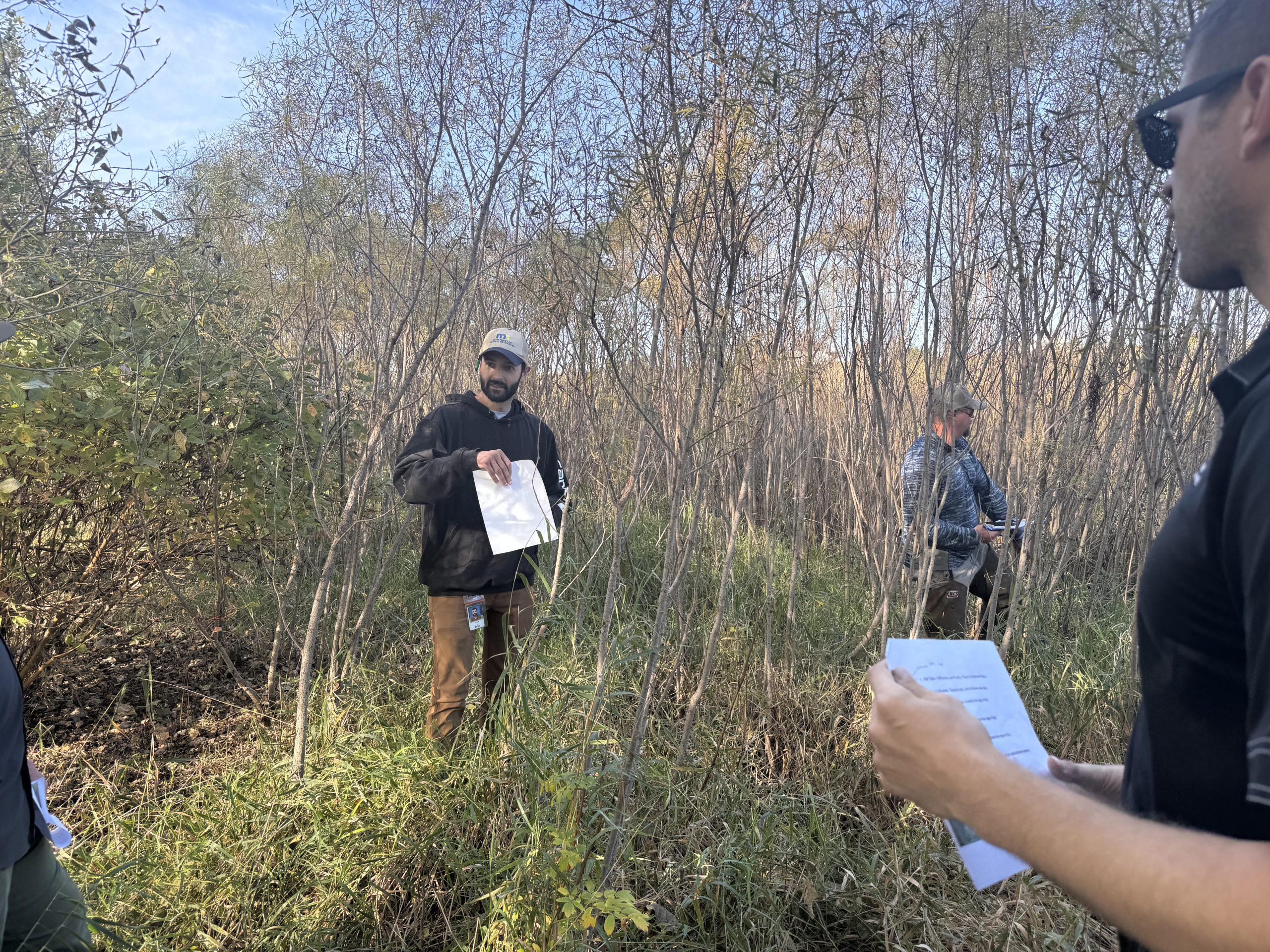 The overall schedule has not changed from the earlier announcement:
Early Fall 2027: Gradual drawdown of the lake begins.
Late Fall–Early Winter 2027: SHPO and DNR reviews take place, followed by installation of the rock arch rapids and recreational access features.
Early Spring 2028: Seeding of restored areas begins.
Late Spring 2028: The site is expected to reopen to the public after spring thaw.
Want to learn more?
The DNR’s Toe Wood-Sod Mat Factsheet explains how similar mats are built and installed. For background on the permitting step behind the delay, see the Minnesota Pollution Control Agency’s summary of Section 401 certification.